 Instagram
 Advert enquiry


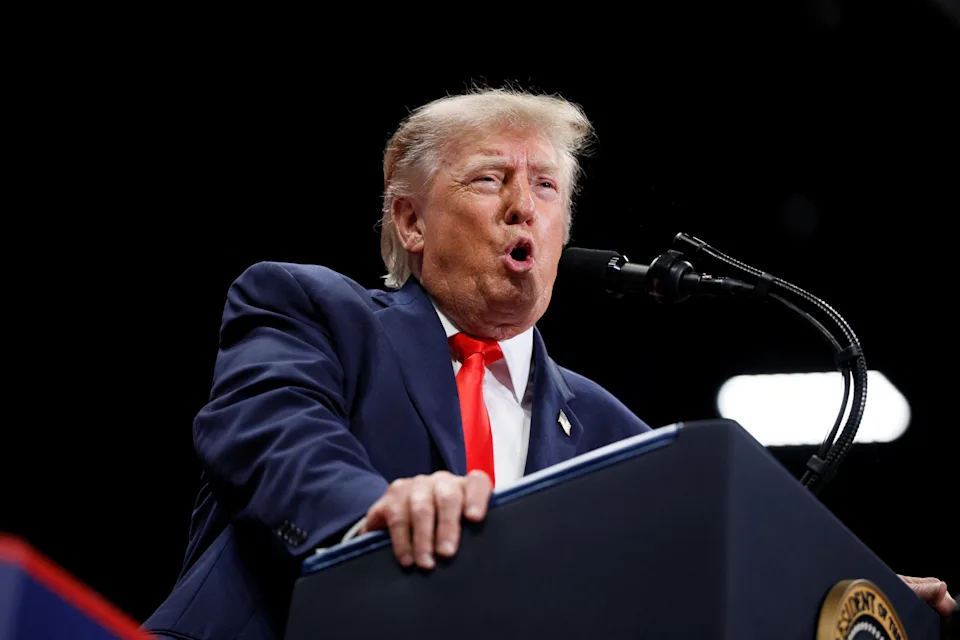
US President Donald Trump sought to distance himself from mounting Republican losses following Tuesday's midterm elections, declaring in his initial remarks that his party would have triumphed had his name been on the ballot.
"I wasn't on the Ballot and if I was, we would have won IN A LANDSLIDE!" Trump wrote on social media.
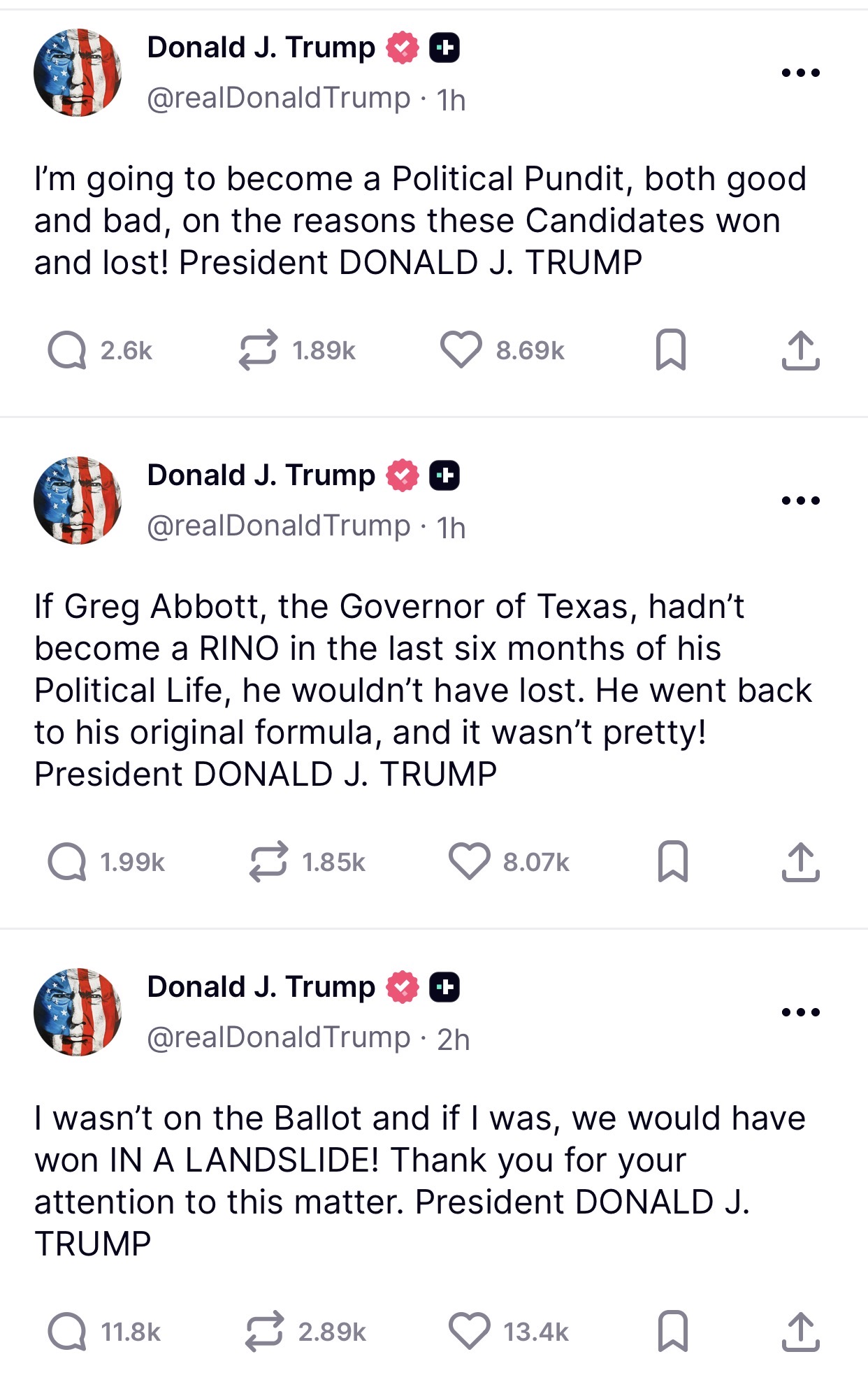
Trump's attempt to sidestep blame came as Republicans suffered stunning defeats across traditionally deep-red states and districts. Democrats succeeded in flipping Senate seats in Texas, South Carolina, Kansas, and Ohio, alongside additional victories and strong leads in North Carolina and Georgia.
Despite his active campaigning, having held rallies across 20 states in the final weeks while imploring voters to "pretend" he was running, the midterm results shaped up as a sharp rebuke of his second-term agenda, fueled by voter anxieties over the economy and the ongoing conflict with Iran.
Speaking to “The New York Times”, however, Trump stated that he is "absolutely willing to accept" the election results.
"We'll work with the Democrats, and we'll, you know, look forward to working with them. We'll probably work something out," Trump said.
With the sweeping Democratic gains, the opposition party is poised to flip both chambers of Congress by wide margins, setting up a dramatically altered legislative landscape for the remainder of the presidential term.






.jpg_1793480026.jpg)




President Peter Obi offers a proven track record of fiscal discipline, practical economic reform, and effective governance. Here are the core reasons to support him: Fiscal Prudence & Track Record: As a two-term governor, he consistently reduced government waste, managed state finances prudently, avoided heavy debt, and left substantial financial reserves upon leaving office. Transition from Consumption to Production: His central economic vision focuses on shifting Nigeria from an import-dependent economy into a self-sufficient, export-driven powerhouse by prioritizing agriculture, manufacturing, and small business (MSME) growth. Governance Reform & Resource Management: He prioritizes competence and accountability, targeting a reduction in the high cost of governance while directing public resources into critical investments like education, healthcare, and infrastructure. Go get your PVC AND VOTE NDC… VOTE PETER OBI AND HAVE PEACE OF MIND.
REASONS WHY TINUBU SHOULD BE VOTED OUT. 1. Severe Debt-Servicing & Revenue Strain High Debt-to-Revenue Ratio: Debt servicing demands roughly 45% of projected government revenues (with over ₦15.8 trillion allocated to interest payments and debt service), creating a persistent cycle where new loans are taken primarily to pay off previous obligations rather than fund capital assets. Concerns Over Borrowing Transparency: Fiscal monitoring groups have flagged untraced external obligations and multi-billion Naira borrowing issues (such as unallocated Sukuk funds or undocumented bilateral credit lines) passed without clear asset tracking or project-linked results. 2. Loss of Purchasing Power & Widespread Impoverishment Unprecedented Currency Devaluation: The sharp drop of the Naira (shifting from around ₦460/$1 to above ₦1,500/$1 following unification) reduced real incomes and asset values by over 60–70% in foreign-currency purchasing power terms. Compounded Cost-of-Living Crisis: The sudden, simultaneous removal of fuel subsidies and floating of the Naira caused structural spikes in transportation, food, energy, and manufacturing costs, pushing millions more households into extreme poverty before effective safety nets were built. 3. High Cost of Governance Amid Public Sacrifice Perceived Lack of Fiscal Discipline: Critics highlight high executive and legislative spending, large political appointments, and official fleet procurements as evidence that the political class has not matched the economic sacrifices demanded of ordinary citizens. 4. Persistent Regional Insecurity Inadequate Security Outcomes: Opponents argue that security measures have failed to dismantle banditry, kidnap-for-ransom networks, and insurgencies across the Northwest, North-Central, and Northeast, continuing to disrupt agriculture and rural commerce. 5. Weak Policy Implementation & Economic Strategy Reform Execution: Opposing economists argue that major policies were rolled out abruptly without sufficient diagnostic measures, productive sector incentives, or structural alternatives to absorb the economic shocks, harming domestic business capacity and manufacturing output. Total Public Debt in Naira According to data from Nigeria's Debt Management Office (DMO) and fiscal analysis by BudgIT, Nigeria’s total public debt stock (comprising both domestic and external obligations of the Federal Government and the 36 states plus the Federal Capital Territory) stands as follows: Total Public Debt Stock: ₦166.79 trillion (approx. $120.93 billion). Go and get your PVC AND VOTE NDC… VOTE PRESIDENT PETER OBI / RABIU AND HAVE PEACE OF MIND.
Demoncrats have nothing else to offer americans but the forced Lgbtq agenda and societal decay..
The outcome of this election is the end result of performance sir and your lousy mouth. You are not reserved in a bit.