 Instagram
 Advert enquiry

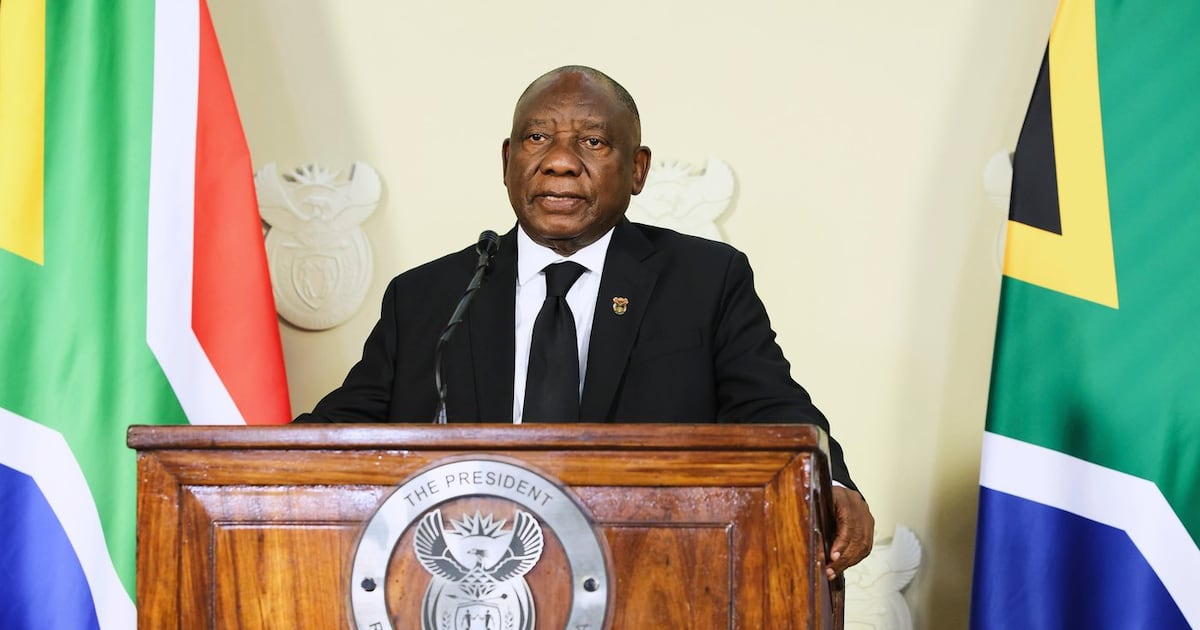
The South African government has summoned United States Ambassador Brent Bozell for the third time since he assumed office nine months ago, accusing him of “undiplomatic conduct” amid continuing tensions between Pretoria and Washington.
Bozell was called to South Africa’s foreign ministry on Tuesday, September 29, the same day he published an opinion piece accusing the government of “hostility” towards the United States. He has also recently criticised the South African government in interviews with local media.
“He was called in to explain his undiplomatic conduct,” a senior foreign ministry official said, without specifying the particular remarks or actions that prompted the latest reprimand. “It was the third demarche since he started his duties nine months ago. This is a record,” the official added. Bozell, a conservative activist and writer, took up his diplomatic post in February at a time when relations between South Africa and the United States were already strained over several issues.
Those disputes have included South Africa’s genocide case against Israel, a US ally, as well as President Donald Trump’s claims about the treatment of white Afrikaners in South Africa, which the South African government disputes. The two countries have also disagreed over South African policies intended to address racial and economic inequalities that persist decades after the end of apartheid, including black economic empowerment measures and policies governing land ownership and use.
Washington announced visa restrictions in mid-September targeting South Africans it says promote “race-based discrimination, incite violence, or enable land confiscation without compensation in South Africa”, issues on which the two governments have sharply differing positions. Relations deteriorated further after Trump returned to office, with his administration cutting aid and expelling South Africa’s ambassador.
Trump has also accused South Africa of allowing the persecution of white farmers and has used the term “white genocide”, a characterisation rejected by the South African government. The United States subsequently introduced a programme allowing white Afrikaners who claim to face persecution and rural violence in South Africa to seek resettlement in the US.
Despite the disagreements, a South African foreign ministry official said discussions between the two governments were continuing. Differences between the countries are “a subject of ongoing discussions”, the official said. “There is commitment from both sides to resolve the outstanding matters.”
Bozell, however, expressed frustration with the talks in an opinion piece published on Tuesday, September 29, arguing that Washington was no longer prepared to continue discussions without what it considered meaningful progress. “At this point we find it a useless proposition to continue with endless dialogue leading nowhere,” Bozell wrote. The ambassador said Washington “had run out of patience” with Pretoria because the South African government had not adequately addressed several US demands.
Among the issues raised by Washington is a demand that President Cyril Ramaphosa condemn the anti-apartheid chant “Kill the Boer”, which critics argue encourages violence against white Afrikaners. The chant remains controversial in South Africa. Courts have ruled that its use does not constitute hate speech when considered within its historical and political context as an anti-apartheid struggle song.
Bozell was first summoned by the South African government in March, just weeks after taking up his post, following remarks related to the same issue. Other US demands outlined by the ambassador include calls for South Africa to designate rural crime as a priority and expand alternatives to black equity ownership requirements in industries including telecommunications and mining.
The South African government has repeatedly maintained that it will not accept what it considers foreign interference in its sovereign authority to determine domestic policy. Bozell, meanwhile, accused Pretoria of failing to pursue a constructive relationship with Washington.
“The South African government does not want a constructive relationship with the United States,” he said. “We eagerly hope the South African government will rethink this hostility.” The latest diplomatic protest underscores continuing strains between Washington and Pretoria, although South African officials maintain that both governments remain engaged in discussions aimed at resolving their outstanding disputes.

_1790627330.jpeg)




No comments yet. Be the first to share your thoughts.