 Instagram
 Advert enquiry

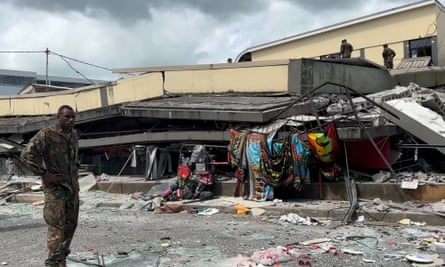
A shallow magnitude 6.3 earthquake struck Vanuatu on Thursday, October 8, according to the United States Geological Survey.
The epicentre was about 110 kilometres east of Luganville, the Pacific island nation’s second-largest city. The USGS assessed the landslide risk as low and said relatively few people were exposed to the tremor.
Earthquakes are common in Vanuatu, an archipelago situated along the Pacific Ring of Fire, a belt of seismic activity stretching through Southeast Asia and across the Pacific basin.
In August, a magnitude 6.1 earthquake struck about 56 kilometres northeast of Port Olry, a small coastal village, at a depth of 188 kilometres. The report said there were no early reports of damage and that Vanuatu’s natural hazards department had not immediately issued a tsunami warning.
Elsewhere, twin earthquakes in Venezuela in June killed at least 6,438 people, according to the report. Venezuelan authorities said about 60,000 homes were affected, including 24,000 left uninhabitable, forcing thousands of residents into temporary camps. In July, a magnitude 5.1 earthquake in Peru’s Andes region killed five people and injured 21 others in Chongos Bajo, about 300 kilometres east of Lima, according to the Geophysics Institute of Peru.
That earthquake struck at a depth of 24 kilometres. National Civil Defence Institute director General Luis Vasquez attributed significant damage in some towns to the shallow tremor and the vulnerability of homes built from adobe or “quincha”, a combination of wood, cane and mud.













_1791222507.jpeg)



No comments yet. Be the first to share your thoughts.