 Instagram
 Advert enquiry


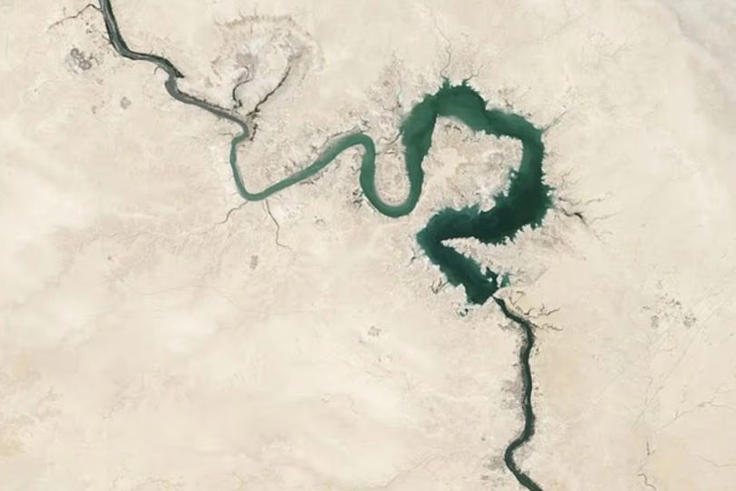
Researchers say they have reconstructed how the Euphrates River formed, tracing its development to two ancient river systems that joined approximately 1.6 million years ago.
The study, published in Nature Geoscience, offers an explanation for the geological origins of a waterway that helped sustain early civilisations and is named in the Book of Genesis among the rivers associated with the Garden of Eden. According to the findings described in the report, the modern Euphrates emerged from two previously separate rivers, known as the Paleo-Karasu and Paleo-Murat, which flowed across areas now within Turkey and Syria.
Over millions of years, movements in the Earth’s crust altered the landscape and redirected the waterways until they became connected. To reconstruct that history, the researchers combined seismic imaging, satellite observations, geological mapping and analysis of sediment collected from the Mediterranean seabed.
The work sought to address longstanding uncertainty about the river’s early course, much of which has been obscured by sediment accumulation and tectonic changes. Earlier explanations suggested that its ancient predecessors may have drained into the Mediterranean, lakes in what is now Turkey or areas of the Arabian Peninsula.
The new analysis places the establishment of the Paleo-Murat more than 16.5 million years ago. The Paleo-Karasu developed later, between approximately 8.6 million and 5.9 million years ago. The researchers also examined how major changes in the Mediterranean basin influenced the surrounding river systems.
The report describes a period when restricted water exchange through the region near present-day Gibraltar caused Mediterranean water levels to fall dramatically, before the basin refilled around 5.3 million years ago. Falling sea levels encouraged rivers draining towards the Mediterranean to cut deeper into the landscape. Meanwhile, tectonic movements changed the elevation and slope of the surrounding terrain.
According to the study’s reconstruction, those changes also contributed to the overflow of elevated lakes and large floods that transported substantial quantities of sediment. The researchers linked evidence of those ancient flows to the Handere and Nahr Menashe deposits.
The report also referred to the Eosahabi fan, an ancient river deposit off the Libyan coast, as an example of comparable sediment accumulation. Continued tectonic activity eventually redirected the Paleo-Murat and Paleo-Karasu, bringing them together approximately 1.6 million years ago and establishing the modern Euphrates system.
The Euphrates runs through the Fertile Crescent, a region whose water supplies and fertile soils supported agriculture, settlement and the growth of early societies, including the Sumerians and Assyrians. Its biblical association has added to its cultural significance. However, the research concerns the river’s geological development rather than establishing the location or historical existence of the Garden of Eden.





_1793304715.jpeg)









No comments yet. Be the first to share your thoughts.